
CONTACT US
East side of 7th Floor, No. 3663, North
Zhongshan Road, Shanghai, China, 200062
Tel: +86 21 6223 2322
www.smile.ecnu.edu.cn

Summary
Hosted by the Shanghai Municipal Institute for Lifelong Education (SMILE), the May working meeting of the "BRICS+" Joint Laboratory on Climate Change Education and Green Development brought together scholars and practitioners from across the Global South. Participants welcomed new members, shared emerging research and practical experiences, reviewed ongoing initiatives, and explored future opportunities for collaboration, which further strengthens international cooperation in climate education, green development, and sustainable futures.
On May 25, the "BRICS+" Joint Laboratory on Climate Change Education and Green Development held its monthly online working meeting, bringing together experts, scholars, and practitioners from South Africa, India, Brazil, Thailand, Malaysia, Kazakhstan, Uzbekistan and other countries. Hosted by the Shanghai Municipal Institute for Lifelong Education (SMILE), the meeting served as a platform to review recent progress, share emerging research, and explore future opportunities for international collaboration. The session was co-chaired by Zhang Mengjie and Kuang Ying of the SMILE working team.
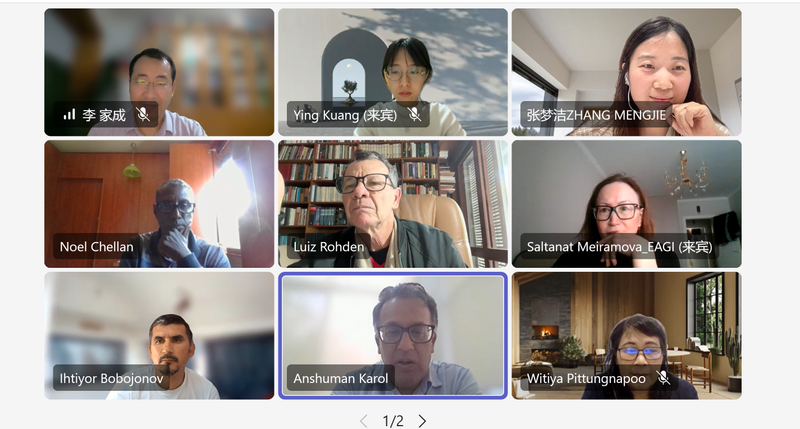
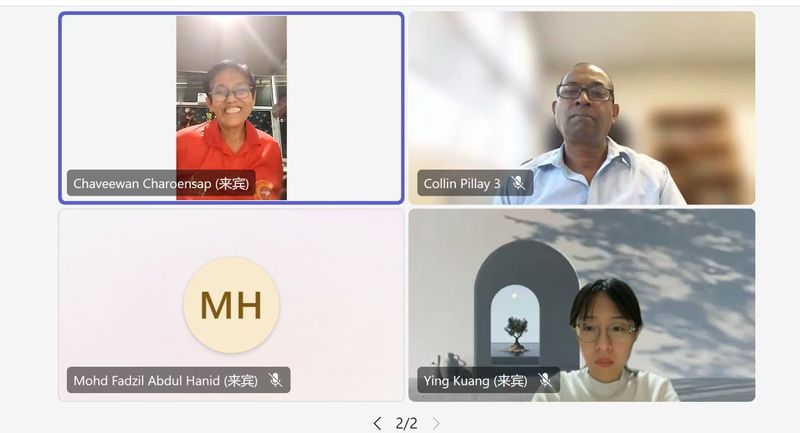
Established by leading scholars from China, South Africa, and Thailand, the "BRICS+" Joint Laboratory has grown into adynamic network dedicated to advancing climate change education and green development across the Global South. The initiative now includes representatives from India, Brazil, the United Arab Emirates, Malaysia, Cuba, Kazakhstan, Uzbekistan, and many other countries. Through academic exchange, joint research, and international cooperation, the Laboratory continues to connect researchers and practitioners working on shared sustainability challenges.
One of the highlights of the meeting was the official welcoming of two new members. Dr. Anshuman Karol ofIndia, whose work focuses on community-based research and climate action governance, and Dr. Ihtiyor Bobojonov of Uzbekistan, a senior researcher at Germany's IAMO specializing in agricultural climate risk management and integrated modelling, formally joined the Laboratory. Their participation further enriches the Laboratory's expertise and strengthens its international network. The Chinese Secretariat also reported ongoing engagement with outstanding scholars from Russia, Türkiye, Vietnam, and Indonesia, with additional members expected to join the initiative in the near future.
Providing an update on recent developments, Professor Li Jiacheng, the Executive Vice President of SMILE, highlighted the Institute's latest achievements in climate change education, including international academic exchanges, research collaboration, and scholarly publishing. He shared recent progress in areas such as China–Republic of Korea academic exchanges, the Shenzhen Conference on "Artificial Intelligence+ Climate Change Education", and the preparation of several publications both in Chinese and English. He also encouraged members to make full use of the Joint Laboratory platform to deepen cooperation and expand collaborative research. Scholars from South Africa, Brazil, India, and other countries then shared updates on their latest work in climate education, disaster preparedness, flood response, resilient city development, and related research projects.
During the project advancement session, Kuang Ying, a member of the SMILE working group, provided a detailed update on the progress of the Joint Laboratory's first bilingual publication, Building a Green Future for "BRICS+" Countries: Climate Change Education and Green Development. The volume has received strong support from members across participating countries and is currently in preparation. Looking ahead, Dr. Collin Pillay of South Africa presented plans for the inaugural international conference of the "BRICS+" Joint Laboratory on Climate and Green Development, which is scheduled to take place in South Africa in 2027. Participants exchanged views on the thematic focus of the conference, format, overall positioning, and suggestions for guest invitations .
The open discussion session, moderated by Dr. Noel Chellan from South Africa, focused on the applications for transnational research projects, engagement with the United Nations Climate Change Conference (COP31), and the further enhancement of the Laboratory's operational mechanism.
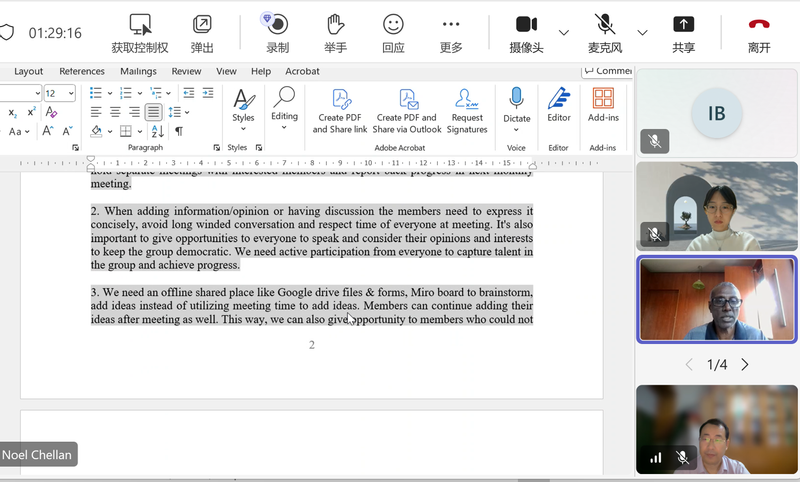
Since the Climate Change Education Forum held during Shanghai Climate Week 2026, SMILE has continued to support the development of the "BRICS+" Joint Laboratory by expanding its international partnerships and coordinating activities in climate education, green development, intergenerational learning, technological adaptation and regional resilience. With its regular working meetings, joint research initiatives, academic publications, and international exchanges, the Laboratory continues to strengthen cooperation among its members and contribute to knowledge sharing across member countries.
As a core academic support institution, SMILE remains committed to advancing international dialogue and collaboration in climate change education and green development. Current initiatives include support for the Climate-Smart Schools initiative jointly launched by UNICEF and the Center for Environmental Education and Communications, Ministry of Ecology and Environment of the People's Republic of China, the publication of the Climate Change Education Research Series, and research on the role of artificial intelligence in climate change education.

East side of 7th Floor, No. 3663, North
Zhongshan Road, Shanghai, China, 200062
Tel: +86 21 6223 2322
www.smile.ecnu.edu.cn
版权所有:上海终身教育研究院