
CONTACT US
East side of 7th Floor, No. 3663, North
Zhongshan Road, Shanghai, China, 200062
Tel: +86 21 6223 2322
www.smile.ecnu.edu.cn
Education helps bring peoples closer together, and closer ties between peoples help stabilize state-to-state relations. From January 4 to 7, 2026, President Lee Jae-myung of the Republic of Korea paid a state visit to China at China's invitation, becoming the first foreign head of state to visit China that year. During their talks, the two heads of state reached important consensus: taking the first head-of-state diplomacy of the new year as an opportunity, China and the Republic of Korea will deepen their strategic cooperative partnership and open up new prospects for bilateral relations. As a major public endeavor that bears directly on people's wellbeing, lifelong education is not only a shared aspiration for a better life in both countries, but also an important bond for bringing the two peoples closer and building mutual understanding. Cooperation between China and the Republic of Korea in the field of lifelong education is therefore a concrete step in implementing the important consensus reached by the two heads of state and deepening the China–ROK strategic cooperative partnership.
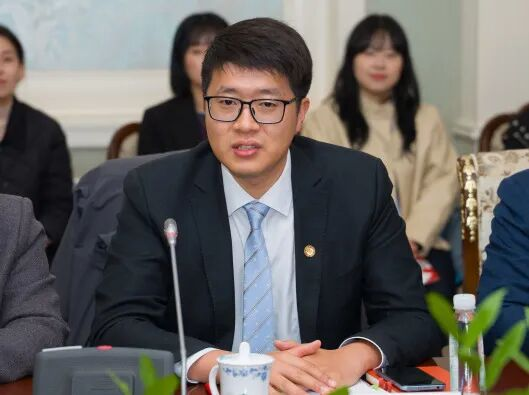
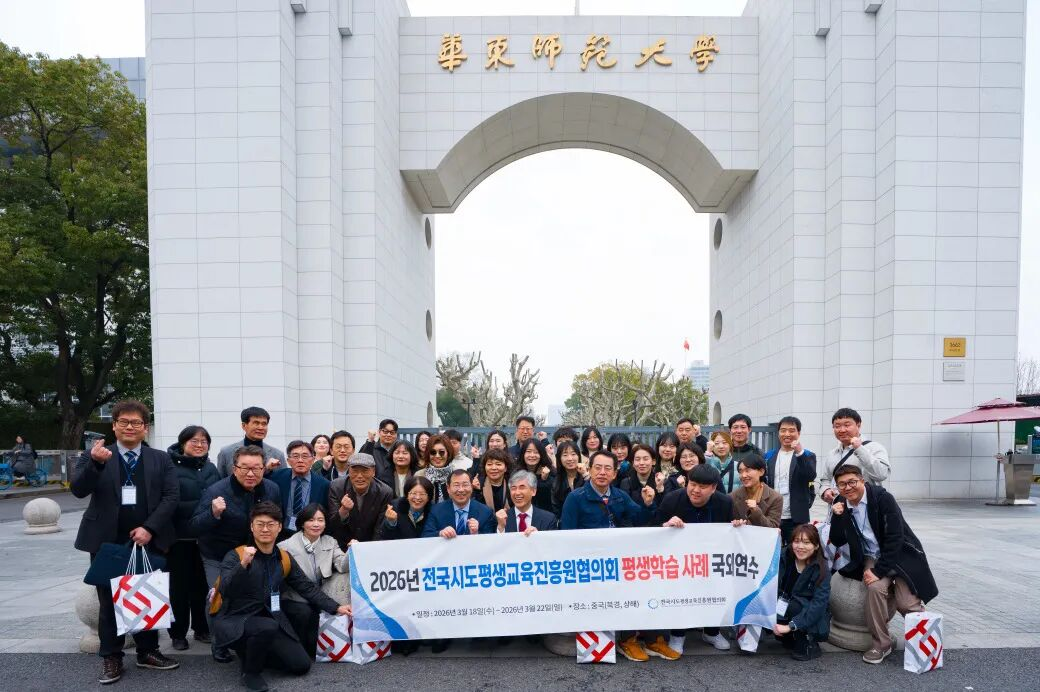
Against this backdrop, on the morning of March 19, a delegation from the National Association of Municipal and Provincial Institutes for Lifelong Learning of the Republic of Korea visited East China Normal University (ECNU) for academic exchange. Participants from ECNU included Yu Meng, Executive of the International Cooperation and Exchange Division of ECNU; Li Jiacheng, Executive Vice President of the Shanghai Municipal Institute for Lifelong Education (SMILE); Zou Wen, Director of the Administration Department of SMILE; Professor Ma Lihua of the Faculty of Education, ECNU, and Principal Researcher for Senior Citizen Education at SMILE; Associate Professor Zhu Min of the Faculty of Education, ECNU, and Principal Researcher of SMILE's Education for Sustainable Development (ESD) Program; and Professor Liu Mingzhuo of the Faculty of Education, ECNU, along with other experts and representatives. The meeting was chaired by Professor Li Jiacheng.

In his opening remarks, Yu Meng extended a warm welcome to the Korean delegation. He noted that, through platforms such as SMILE, ECNU has long been committed to building a lifelong learning service system for learners of all ages, a mission that strongly resonates with Korea's advanced ideas and practices in lifelong education. He expressed the hope that the visit would serve as an important opportunity for both sides to deepen mutual learning and cooperation in such areas as innovation in lifelong education models and the building of learning cities, jointly advance China–ROK collaboration in lifelong education, and contribute to the construction of a learning society.
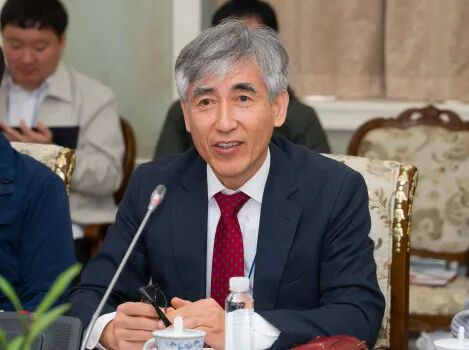
In his remarks, Dr. Hahn Yong-Jin, President of the National Association of Municipal and Provincial Institutes for Lifelong Learning, reviewed the friendly exchanges between the Association and ECNU. Using the metaphor of a “wood”, he expressed the hope that the friendship between the two sides would take root, flourish, and endure. He observed that the twenty-first century is the era of lifelong education. In the face of the dual challenges of population aging and artificial intelligence, education should draw spiritual nourishment from the wisdom of Confucius and Mencius and renew its commitment to humanistic care and moral foundations. He expressed the hope that this exchange would further deepen mutual learning and collaborative innovation between China and the Republic of Korea in the field of lifelong education, enabling both sides to respond together to the questions of the times.
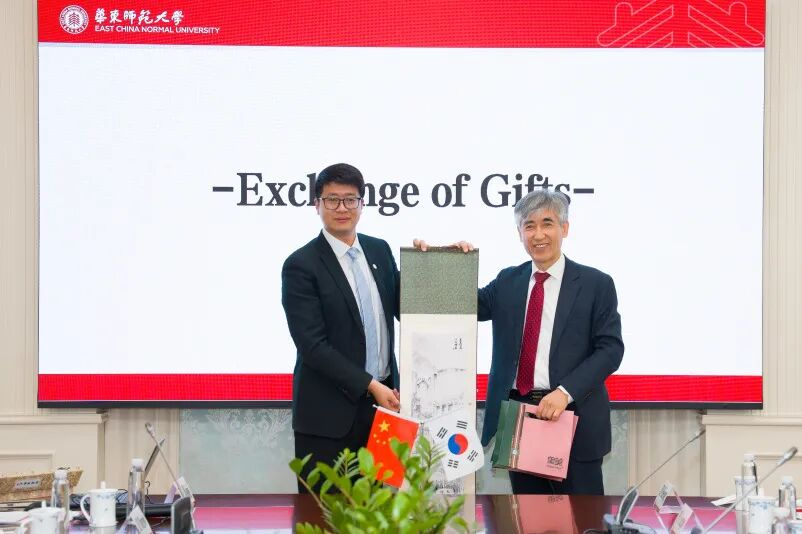
During the meeting, the two sides exchanged commemorative gifts as a gesture of their shared wish for the continued deepening of China–ROK friendship.
In the thematic presentation session, Associate Professor Zhu Min systematically introduced the progress and practical experience of Shanghai's lifelong education system. She noted that Shanghai has established a four-tier lifelong education service network covering the entire municipality and provides services through multiple channels, including community schools and digital platforms. In response to practical challenges such as a large population and high mobility, Shanghai is further refining its lifelong education system by revising relevant regulations and formulating new plans, thereby accelerating the building of the learning city.
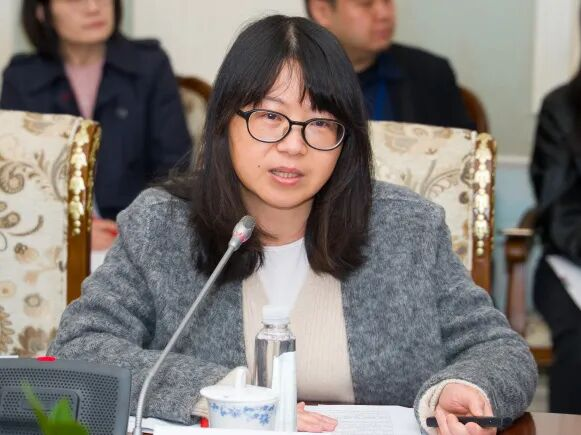
Professor Ma Lihua then analyzed Shanghai's practices in senior citizen education against the backdrop of deep population aging. She pointed out that Shanghai has already established a senior citizen education network spanning the municipal, district, and sub-district/town levels, and has extended services to communities and elderly care institutions through an integrated model combining care and education. In curriculum design, emphasis is placed on relevance to learners' needs, tiered provision, and developmental guidance, while teaching innovation is supported by a teaching force that combines full-time and part-time instructors. At the same time, Shanghai has actively empowered older-adult learning through digital technologies by building multi-terminal learning platforms and smart learning scenarios. She also noted that Shanghai's senior citizen education still faces challenges, including uneven regional development and insufficient participation by social forces.
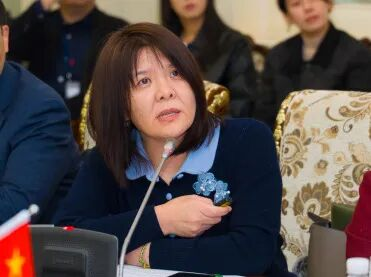
Professor Li Jiacheng then introduced SMILE's work in four major areas: policy research, theoretical research, practical reform and innovation, and international exchange, with particular reference to its long-standing cooperation with Korean partners in lifelong education and climate change education. Building on the close interaction and cooperative momentum between the two sides, he put forward four proposals for future collaboration: first, signing a memorandum of understanding to establish a regular exchange mechanism; second, deepening cooperation between Shanghai and cities and regions such as Seoul, Gyeonggi Province, and Jeju in the building of learning cities; third, jointly conducting thematic studies on senior citizen education in the context of demographic change and on green development; and fourth, under the framework of APEC, working with partners from the Republic of Korea, Australia, New Zealand, the United States, Canada, and other countries to build a consortium for educational development and expand the international cooperation network.
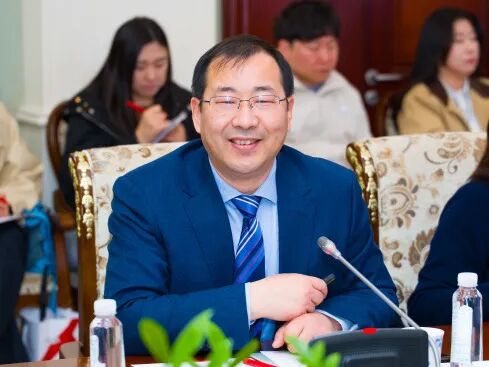
During the discussion session, the Korean representatives expressed appreciation for the warm reception from the Chinese side and conveyed their strong willingness to further deepen China–ROK cooperation. The two sides engaged in in-depth exchanges on topics including education on environmental and climate change, adult education, lifelong education provision for migrant populations and foreign residents, family education, and the formulation of the 15th Five-Year Plan for lifelong education development, and reached broad consensus on future directions for cooperation.
SMILE has always attached great importance to maintaining close ties and cooperation with counterparts in Korea's lifelong education community. The visit of the Korean delegation has further strengthened exchange, mutual learning, and practical cooperation between China and the Republic of Korea in the field of lifelong education in an all-round way, injecting fresh momentum into the deeper integration of academic research, talent cultivation, and practical innovation between the two sides. Standing at a new starting point for the high-quality development of China–ROK relations, both sides will take this exchange as a new bond to further cultivate cooperation in lifelong education. In doing so, they will not only promote the mutual sharing and mutual learning of educational resources, but also consolidate the foundation of friendship through people-to-people educational exchange. Looking ahead, the two sides will build on their respective strengths and deepen cooperation through concrete action, making educational collaboration an important bridge of China–ROK friendship and contributing more momentum and wisdom from lifelong education to the common response to global aging.

East side of 7th Floor, No. 3663, North
Zhongshan Road, Shanghai, China, 200062
Tel: +86 21 6223 2322
www.smile.ecnu.edu.cn
版权所有:上海终身教育研究院