
CONTACT US
East side of 7th Floor, No. 3663, North
Zhongshan Road, Shanghai, China, 200062
Tel: +86 21 6223 2322
www.smile.ecnu.edu.cn

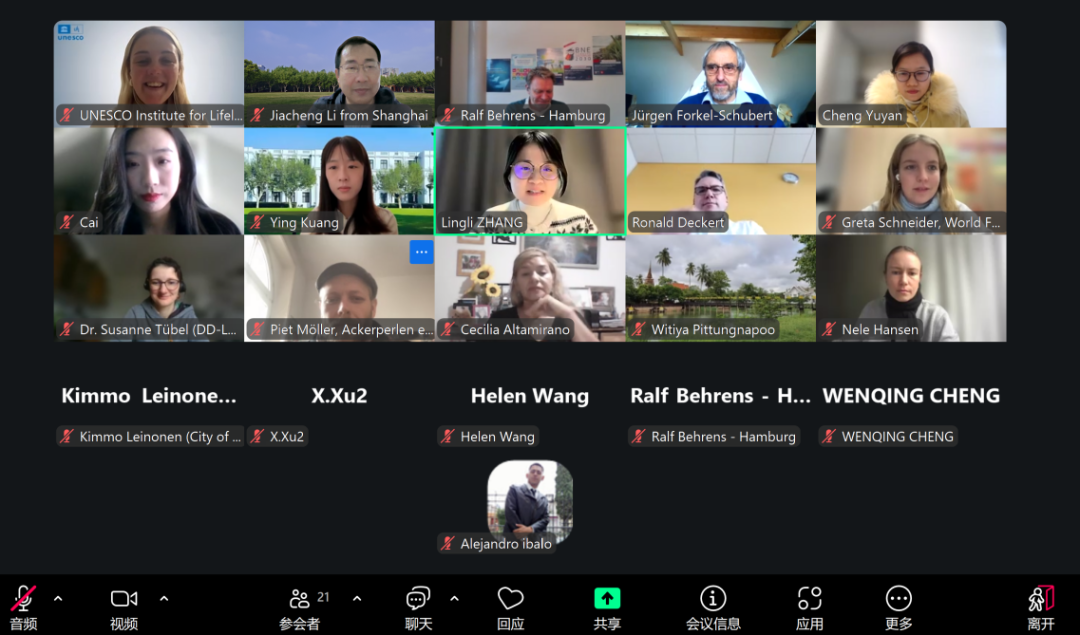
On February 19, 2026, the Shanghai Municipal Institute for Lifelong Education(SMILE) and Mingqiang Primary School in Qibao Town, Minhang District, Shanghai, jointly participated in the first thematic meeting of 2026 organized by the Education for Sustainable Development (ESD) Working Group of the UNESCO Global Network of Learning Cities (GNLC), themed "Harnessing Digital Technologies and AI for ESD in Learning Cities."
The meeting featured keynote presentations by educators from the two learning cities of Shanghai, China, and Espoo, Finland. Representatives from GNLC member cities also engaged in in-depth discussions on innovative pathways for empowering education for sustainable development through digital and intelligent technologies. The meeting was jointly moderated by Zhang Lingli, Part-time Researcher of SMILE, and Katie Jones, Consultant to the UNESCO Institute for Lifelong Learning.
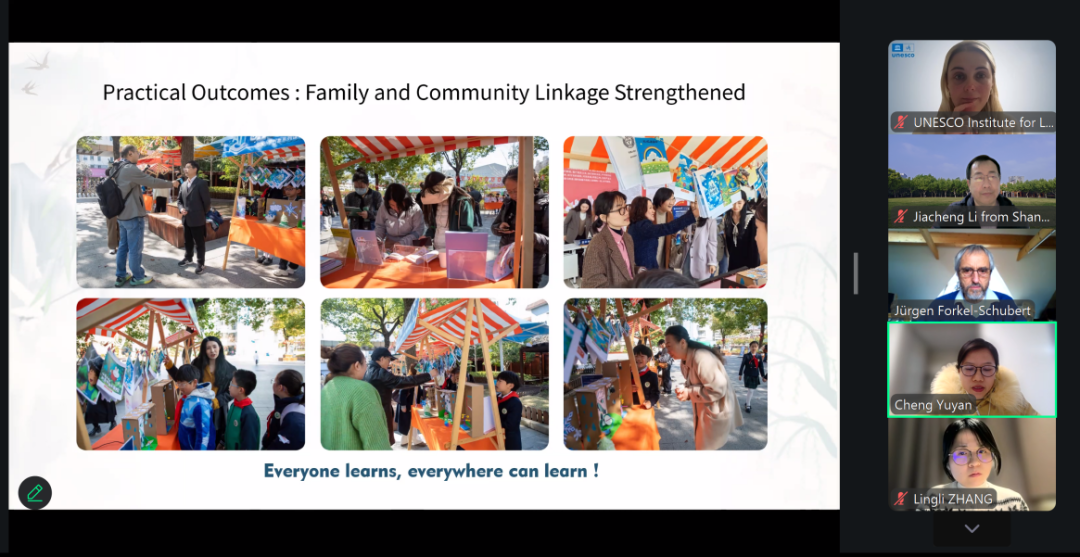
As Shanghai's representative, Cheng Yuyan, the teacher from Mingqiang Primary School in Qibao Town, Minhang District, delivered a presentation entitled "Practice and Exploration of AI-Empowered Climate Change Education in Primary Schools," sharing cutting-edge achievements in this field. The school has been deeply engaged in integrating AI with climate change education for more than two years and previously co-hosted the First Seminar on Climate Change Education through School-Family-Society Collaboration. The case presented at the meeting demonstrated the core value of AI in breaking cognitive barriers, reshaping learning experiences, and fostering future-oriented competencies. By building a cluster of “AI + Climate Education” projects, the school has developed five major pathways for AI application, namely environmental simulation, creative expression, empirical analysis, interactive dialogue, and immersive experience. These efforts have enabled students to move from knowledge acquisition to problem-solving, significantly enhancing the effectiveness of climate change education in the school.
At present, this school has established a complete cognition-to-action chain of "understanding–empathy–inquiry–design–advocacy" among students, realizing an integrated model of school-family-community collaboration and intergenerational climate change education. In this way, climate change education in one school is connected with the development of thousands of residents and the building of the wider community. Meanwhile, the school remains committed to a student-centered educational approach in practice, placing emphasis on scientific and ethical oversight of AI-generated content as well as the cultivation of students' critical thinking. Looking ahead, the school plans to work with multiple stakeholders to develop a municipal digital resource bank for AI-based climate change education and promote its practices through international ESD networks.
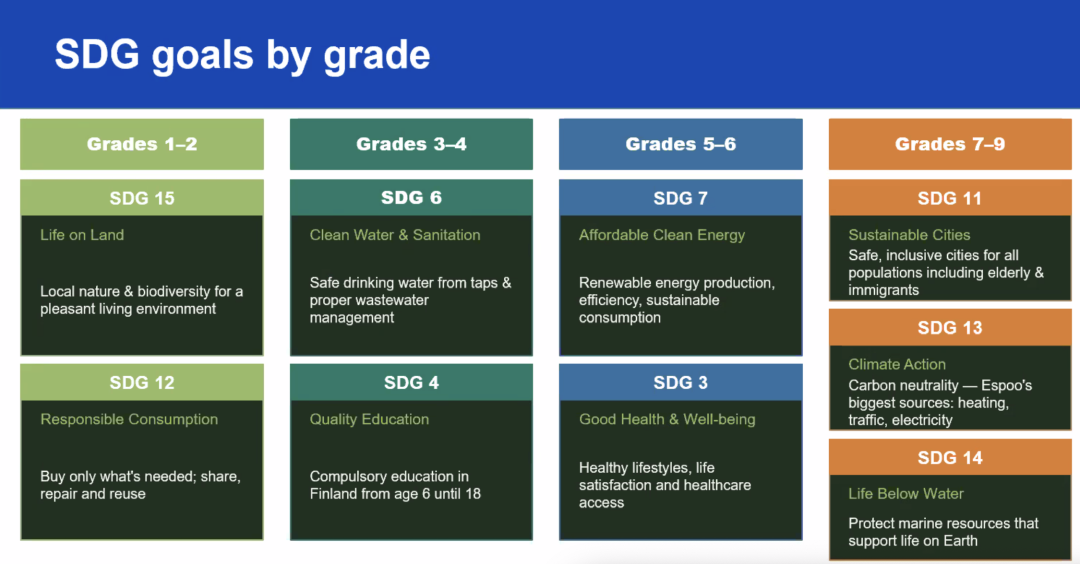
Kimmo Leinonen, the game culture expert from the City of Espoo, Finland, delivered a presentation entitled "Building a Sustainable Future with Minecraft: Learning Innovation in Espoo," introducing Espoo's distinctive practice of integrating game-based learning into education for sustainable development. Drawing on its strong gaming industry foundation, Espoo has developed a learning model centered on Minecraft and has organized the "Builders of a Sustainable Future" Challenge on multiple occasions. The theme of the 2024 competition was "Sustainable Espoo 2040." Open to students from Grades 1 to 9, the competition groups participants by age and tailors learning tasks aligned with the United Nations Sustainable Development Goals accordingly. In the game, students design sustainable development solutions for future cities, and outstanding concepts are further refined in collaboration with city experts.
To ensure effective implementation, Espoo provides specialized training for teachers, builds online technical support platforms, and convenes review panels in collaboration with multiple departments to address issues such as school equipment and teachers' technological preparedness. These efforts enable students to participate voluntarily and with a low threshold, gaining embodied understanding of the ecological, social, cultural, and economic dimensions of sustainable development.
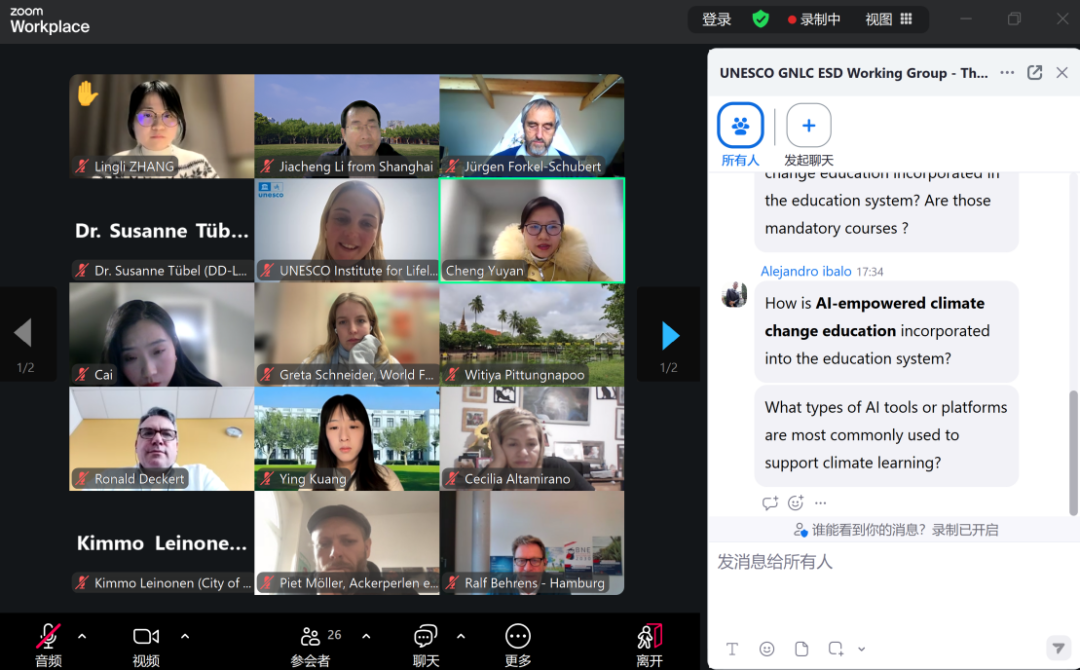
During the discussion session, participants focused on key topics including feedback from families and schools, cross-sector collaboration, the popularization of digital technology education, teacher support, project evaluation, and international exchange and cooperation. The two speakers responded to the questions one by one in detail and shared practical experience in areas such as cross-sector coordination, teacher training in digital competencies, combining compulsory and elective courses, and bridging hardware gaps through school-enterprise cooperation. As sister cities, Shanghai and Espoo each have their own distinctive approaches to digitally and intelligently empowering education for sustainable development, yet both have accurately identified the educational value of such technologies, providing a vivid example of cooperation and exchange between friendly cities in the field of ESD.
At the meeting, the UNESCO Institute for Lifelong Learning also released a global call for educational practice cases from learning cities in areas such as biodiversity, ocean literacy, the Sustainable Development Goals, and digital tools, with a view to further promoting exchange and mutual learning among cities and enriching the case repository for education for sustainable development.
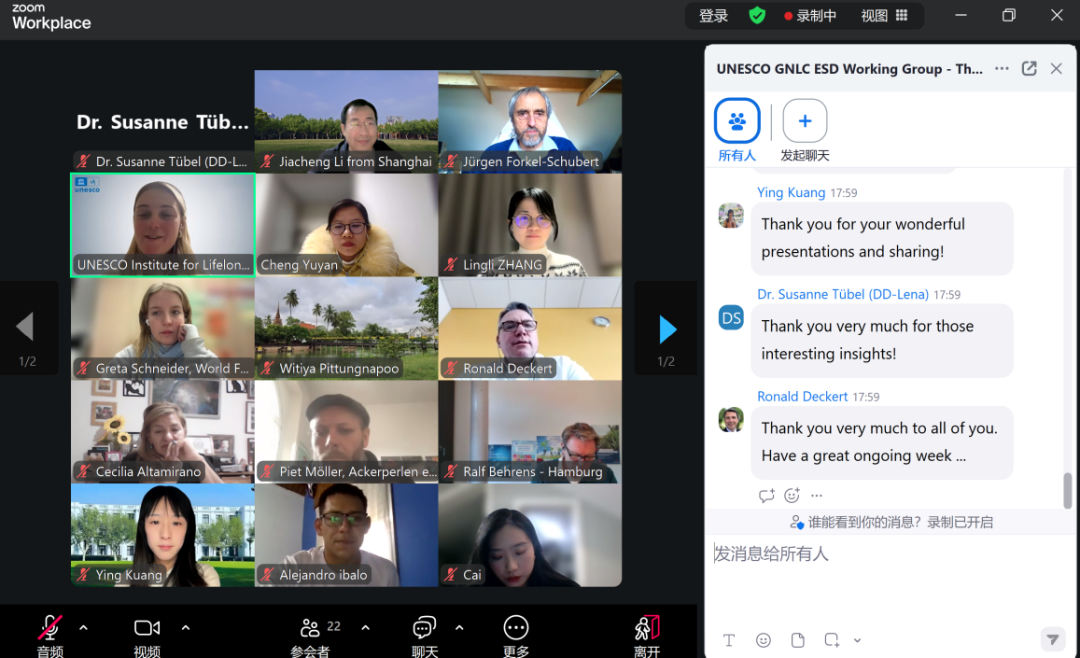
This meeting has provided new ideas for digitally and intelligently empowering education for sustainable development, while further deepening the friendly cooperation between Shanghai, Espoo, and more international learning cities, injecting renewed vitality into the joint advancement of global ESD.
It is learned that SMILE has been deeply involved throughout the compilation of the UNESCO publication "Greening Communities Guidance: Lifelong Learning for Climate and Sustainability Action." The Institute has consistently upheld the orientation of promoting Shanghai's experience and China's distinctive solutions on international platforms, while continuing to deepen research on climate change education with distinctive Chinese characteristics. The "Guidelines for Climate Change Education (Digital and Intelligent Empowerment Edition)" to be developed by SMILE is scheduled for official release at the Climate Change Education Forum of Shanghai Climate Week 2026. This initiative aims to encourage and support educational institutions of all types and at all levels across China—including universities, primary and secondary schools, community colleges, and universities for older adults—in further exploring and accumulating richer local experience.
In addition, as one of the coordinating cities of the Education for Sustainable Development Working Group under the UNESCO Global Network of Learning Cities, Shanghai will continue to work withHamburg, Germany, to advance the 12 working meetings and thematic meetings scheduled for this year, while jointly planning the 2026 Global Online Conference on Education for Sustainable Development.

East side of 7th Floor, No. 3663, North
Zhongshan Road, Shanghai, China, 200062
Tel: +86 21 6223 2322
www.smile.ecnu.edu.cn
版权所有:上海终身教育研究院