
CONTACT US
East side of 7th Floor, No. 3663, North
Zhongshan Road, Shanghai, China, 200062
Tel: +86 21 6223 2322
www.smile.ecnu.edu.cn

The year 2025 marks the 50th anniversary of the establishment of diplomatic relations between China and Thailand, as well as the "Golden 50 Years of China-Thailand Friendship." On November 14, President Xi met with King Maha Vajiralongkorn of Thailand. President Xi emphasized, "Standing at a new historical starting point, China is willing to work with His Majesty King Vajiralongkorn to lead the construction of a China-Thailand community with a shared future to achieve greater progress in the next 50 years and jointly write a new chapter of China-Thailand friendship."
At this important moment, to further enhance educational exchange and mutual learning, a delegation of over 30 representatives—including experts and scholars from the Thailand Education Equality Foundation, Phayao University, and Yala Rajabhat University, as well as mayors and deputy mayors from Thai cities such as Tak, Udon Thani, Lamphun, Trang, and Yala—visited the Shanghai Municipal Institute for Lifelong Education (SMILE) on November 15 for exchange activities. Representatives from East China Normal University (ECNU), including Yu Meng, Executive of the International Cooperation & Exchange Division of ECNU; Prof. Ying Kuang, Vice Director of the Faculty of Education of ECNU; JiachengLi, Vice Executive President of SMILE; WenZou, Administrative Director of SMILE; MinZhu, Associate Professor at the Faculty of Education and Principal Researcher of the ESD program of SMILE; YiLu, Principal of Songjiang District Community College; Qiuju Li, Principal of Nanhui New Town Community School, Pudong New Area, participated in the exchange. The meeting was chaired by Professor Li Jiacheng.
In his opening remarks, YuMeng, Executive of the International Cooperation & Exchange Division of ECNU, stated that the delegation's visit held special significance, coinciding with King Vajiralongkorn's historic state visit to China and the 50th anniversary of China-Thailand diplomatic relations. As a comprehensive research university committed to "cultivating talent, advancing civilization, and promoting development," ECNU has engaged in practical cooperation with multiple Thai institutions in areas such as language education, public administration, and artificial intelligence, with over 150 Thai students currently enrolled. As a megacity, Shanghai continues to advance the construction of a learning city. He expressed hope that this exchange would serve as an opportunity for China and Thailand to share experiences and learn from each other, further deepening cooperation in lifelong education and urban governance, and injecting new educational momentum into China-Thailand friendship.
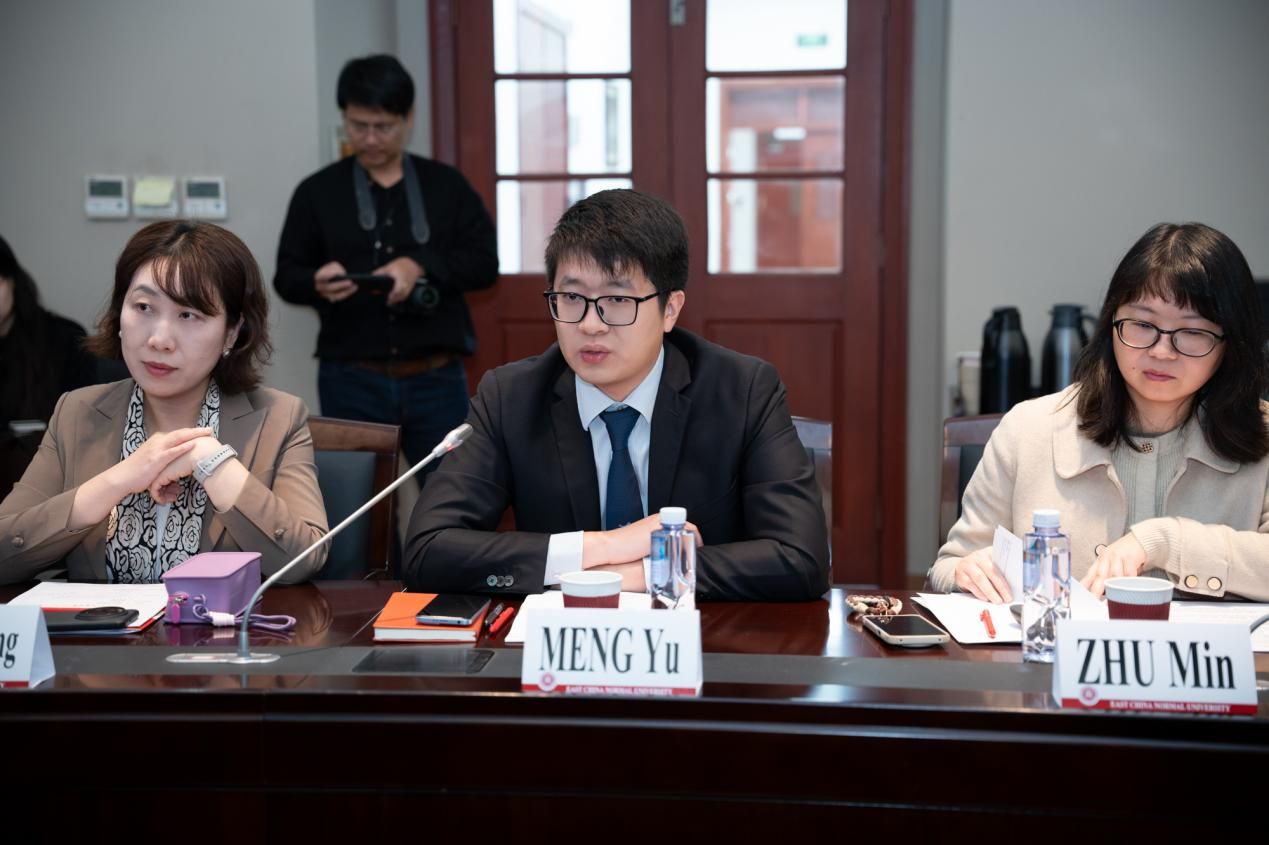
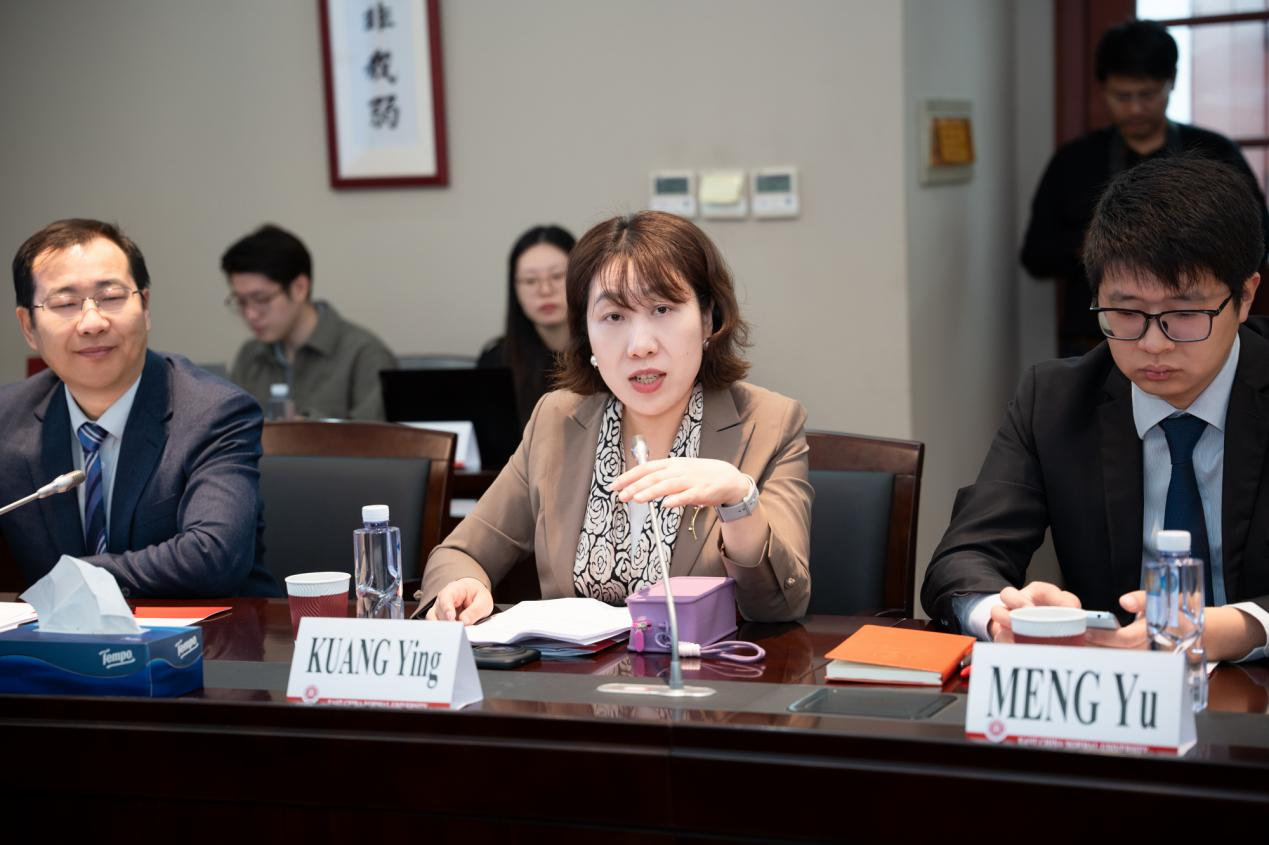
Prof. Ying Kuang, Vice Director of the Faculty of Education of ECNU, highlighted the faculty's achievements in international cooperation, including initiating the Global Education Dean's Alliance, promoting the "Asian Campus+" program with institutions such as Khon Kaen University in Thailand, and joint initiatives between the SMILE and Thai partners in sustainable development education and climate change education. She noted that the delegation’s visit would further deepen collaboration between Shanghai and Thailand in urban education development and talent cultivation, contributing to educational progress in Asia.
Ms. Thantida Wongprasong, Director of Office of Innovation for Learning Opportunity of EEF, emphasized the historic significance of the visit, coinciding with the 50th anniversary of Thailand-China diplomatic relations. She noted that Thailand's development philosophy of "Friendly Cities" and "Learning Cities" aligns closely with China’s approach, aiming to address global challenges such as rapid technological change, climate anomalies, unemployment, and public health issues. The core purpose of this visit, she stated, was to strengthen China-Thailand friendship and learn from Shanghai’s valuable experiences. She expressed hope that the exchange would translate "Friendly City" cooperation into tangible outcomes and contribute to the advancement of the Belt and Road Initiative through educational collaboration.

Amid warm applause, representatives from both sides exchanged symbolic gifts as a token of their anticipation and appreciation for the meeting, highlighting the profound friendship and close cooperation between China and Thailand in the field of education and elevating the friendly atmosphere of the venue.


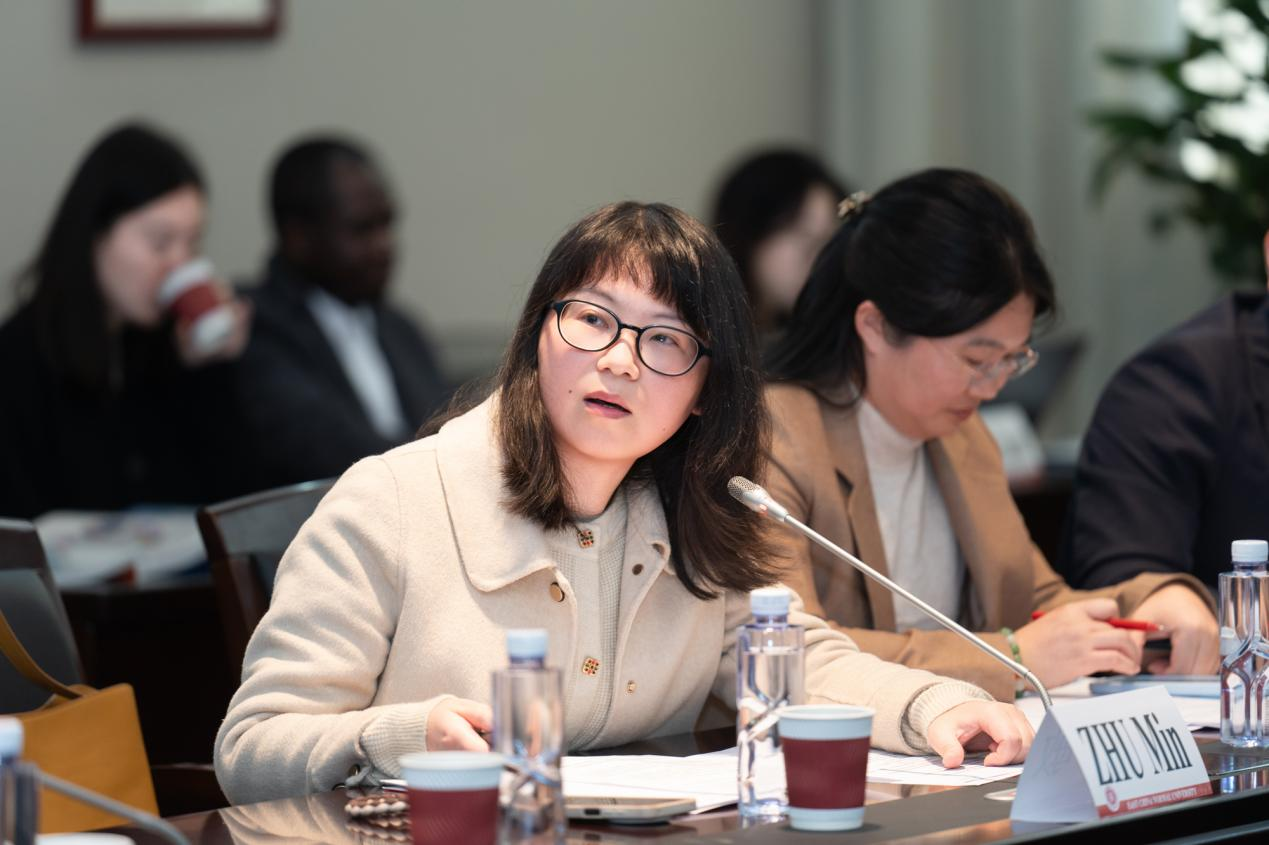
In the academic exchange, Min Zhu, Associate Professor at the Faculty of Education and Principal Researcher of the ESD program of SMILE, first systematically introduced Shanghai’s practical approach to building a learning city over the past three decades. By strengthening government policy coordination, establishing a lifelong education system covering all residents, and integrating sustainable development education with digital technology, Shanghai has developed an effective model of learning-driven urban development. Professor Zhu shared Shanghai's achievements and experiences in community and elderly education, online learning platform development, and active participation in global educational governance, offering valuable insights for the international community.
Yi Lu, Principal of Songjiang District Community College, shared practices at the district level, highlighting Songjiang's community education initiatives based on "technology innovation, culture, and ecology." By organizing visits to tech enterprises, developing local cultural courses, and implementing rural health and elderly care projects, the district integrates lifelong learning into urban development and community governance, providing grassroots practical experience for building "Beautiful Communities" and a "Model New City."

Qiuju Li, Principal of Nanhui New Town Community School, Pudong New Area, presented initiatives at the sub-district level. She introduced Lingang, one of Shanghai's five new cities, which is advancing sustainable development through lifelong learning for all. By establishing collaboration mechanisms among the government, schools, enterprises, and communities, the town integrates resources to offer courses for all age groups. Through smart learning scenarios and intergenerational learning models, it promotes the transmission of green concepts and community co-governance. Additionally, the town actively shares China's experiences in building learning cities through international forums and ecological research exchanges, striving to create a modern community education model that is green, digital, and international.

Ms. Thantida Wongprasong, Director of Office of Innovation for Learning Opportunityof EEF presented the Thailand Education Equality Foundation’s key initiatives and achievements. As an independent public organization directly supervised by the Thai Prime Minister, EEF is dedicated to reducing educational inequality through diverse measures. She highlighted the establishment of learning city demonstration zones in seven regions across Thailand, in collaboration with institutions such as Phayao University and local governments, and the promotion of domestic experience exchange through the Thai Learning Cities Network. She also noted that the foundation is actively expanding international cooperation, having jointly established the "Education Equity Alliance" with 26 organizations from multiple countries. This effort aims to enhance Thailand's international influence in educational equity by engaging cities like Bangkok and Phayao in global educational governance.

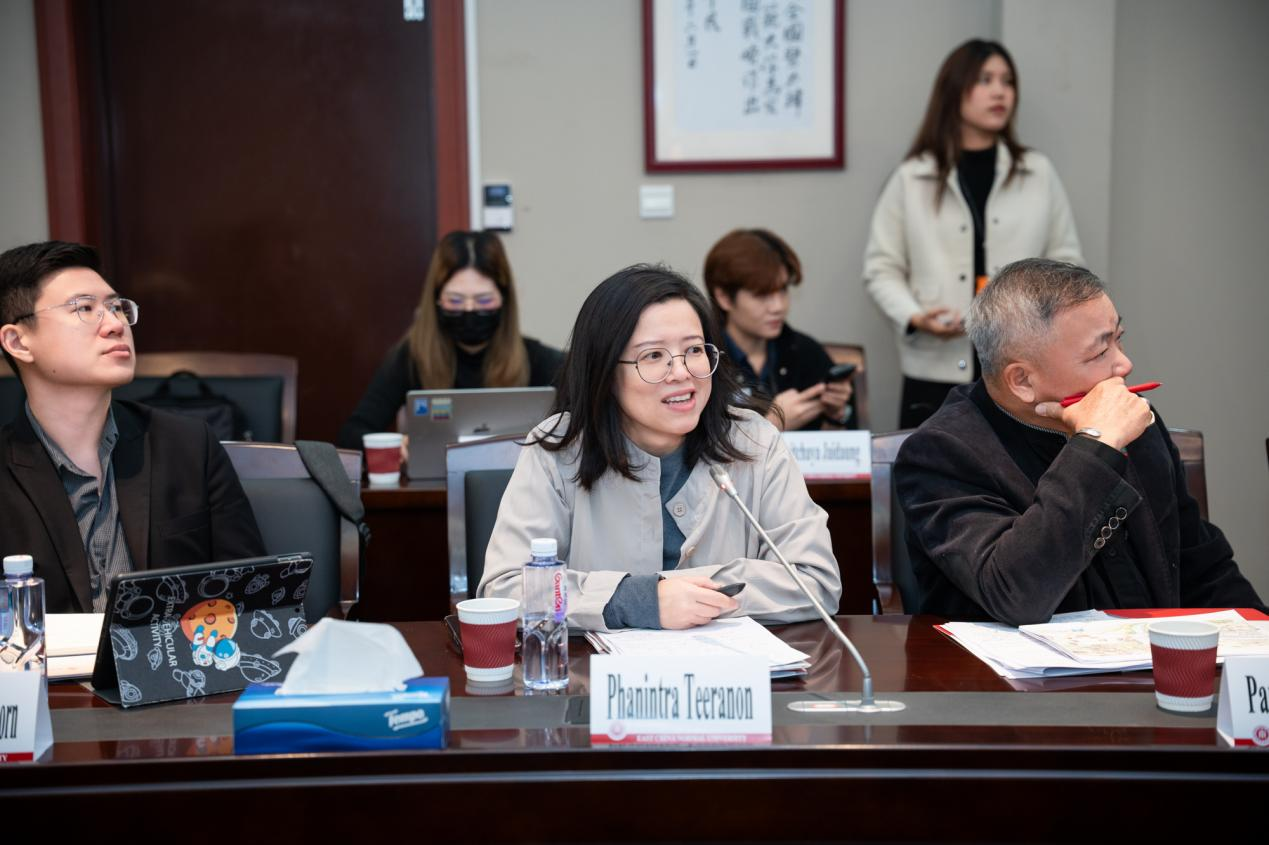
Assoc. Prof. Dr. Phanintra Teeranon, Assistant to the President, University of Phayao, shared the university's achievements as a coordinating institution for learning city construction in Thailand. As a renowned Thai university, Phayao University currently coordinates learning city initiatives in 34 cities, collaborating closely with the EEF through academic research, learning space development, and talent cultivation. The university also partners with higher education institutions in Australia, Japan, the UK, and other countries. This visit to Shanghai, she stated, aimed to learn from the advanced experiences of this model learning city to further enhance Thailand's capacity in building learning cities.
Mr. Parpas Poochareon, Mayor of Lamphun Municipality, noted that Lamphun is a cultural ancient city with a history of 1,300 years in northern Thailand, renowned for its cultural heritage preservation but facing severe challenges related to an aging population. The city is collaborating with educational departments, Phayao University, and other stakeholders to plan the establishment of research centers and cultural research bases, promoting intergenerational cultural inheritance and the development of a lifelong learning system. Mayor Phaphas mentioned that Lamphun has already established a sister-city relationship with Xishuangbanna in China and sincerely invited Shanghai experts to visit Lamphun to jointly advance the construction and development of learning cities.

Mr. Naphon Chayanonpakdee, Mayor of Tak Municipality, introduced the city's practice of focusing on history and culture to build a learning city. The municipal government innovatively proposed the concept of "the whole city as a classroom," transforming temples, museums, and other venues into teaching spaces, and inviting local clans and monks to serve as teachers, integrating historical and cultural heritage into vocational training. Meanwhile, adhering to the principle of lifelong learning for all, the city has created cultural landmarks through events such as the Loi Krathong Festival and generated employment opportunities for young people. Mayor Napong expressed a strong willingness to collaborate with Shanghai in community education.
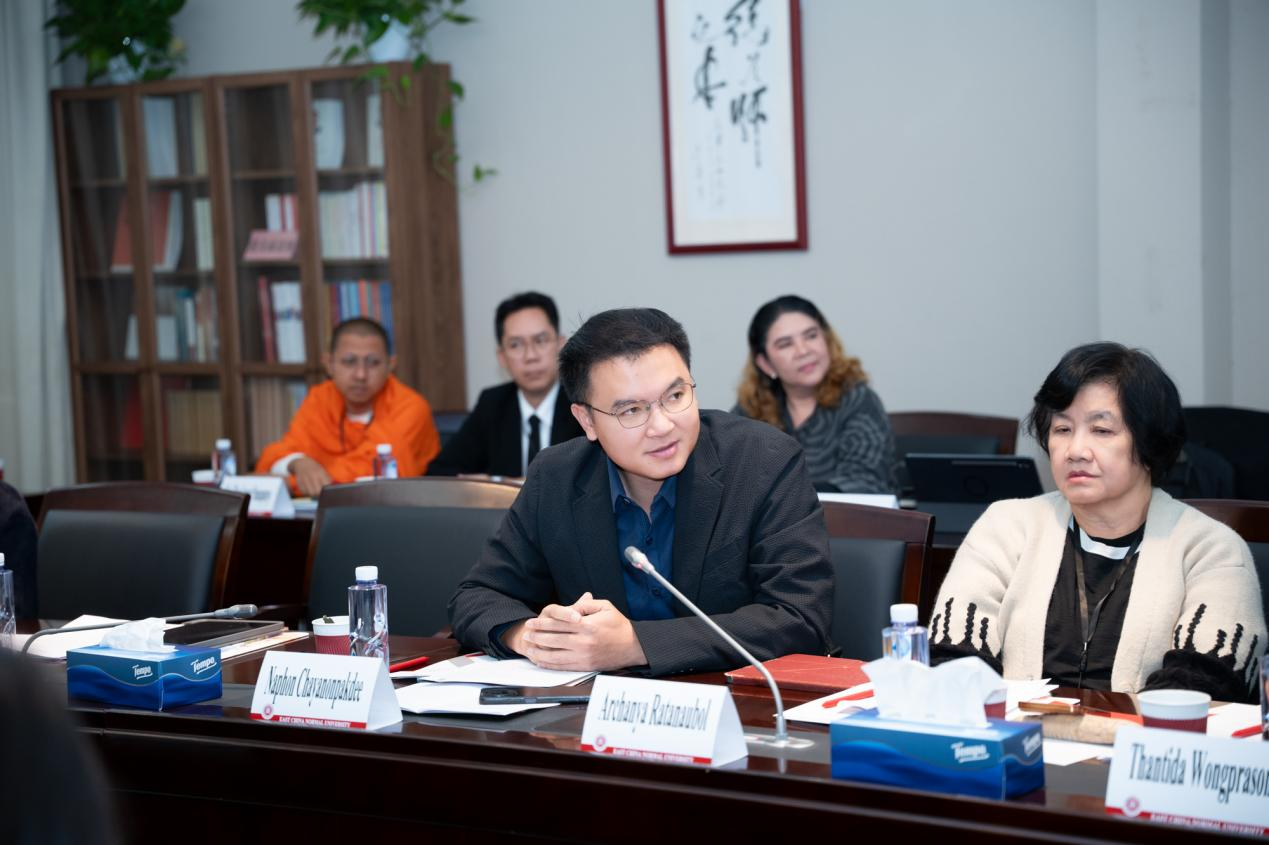
During the discussion session, representatives reached important consensus on deepening China-Thailand cooperation in learning cities. Both sides agreed to establish a working committee comprising ECNU, the EEF, Phayao University, and other institutions, with plans to sign a Memorandum of Understanding to formally establish the "China-Thailand Friendly Network of Learning Cities." In the future, the two sides will focus on deepening regular visits and exchanges in areas such as policy formulation, technological innovation, and talent cultivation, regularly conducting workshops and summarizing experiences to promote best practices to the Global Network of Learning Cities.
In his concluding remarks, Professor Jiacheng Li, Vice Executive President of SMILE, once again expressed sincere gratitude to the Thai delegation for their visit. He stated that the consensus reached during the seminar would be actively implemented, opening a broader future for cooperation and exchange between the two sides.
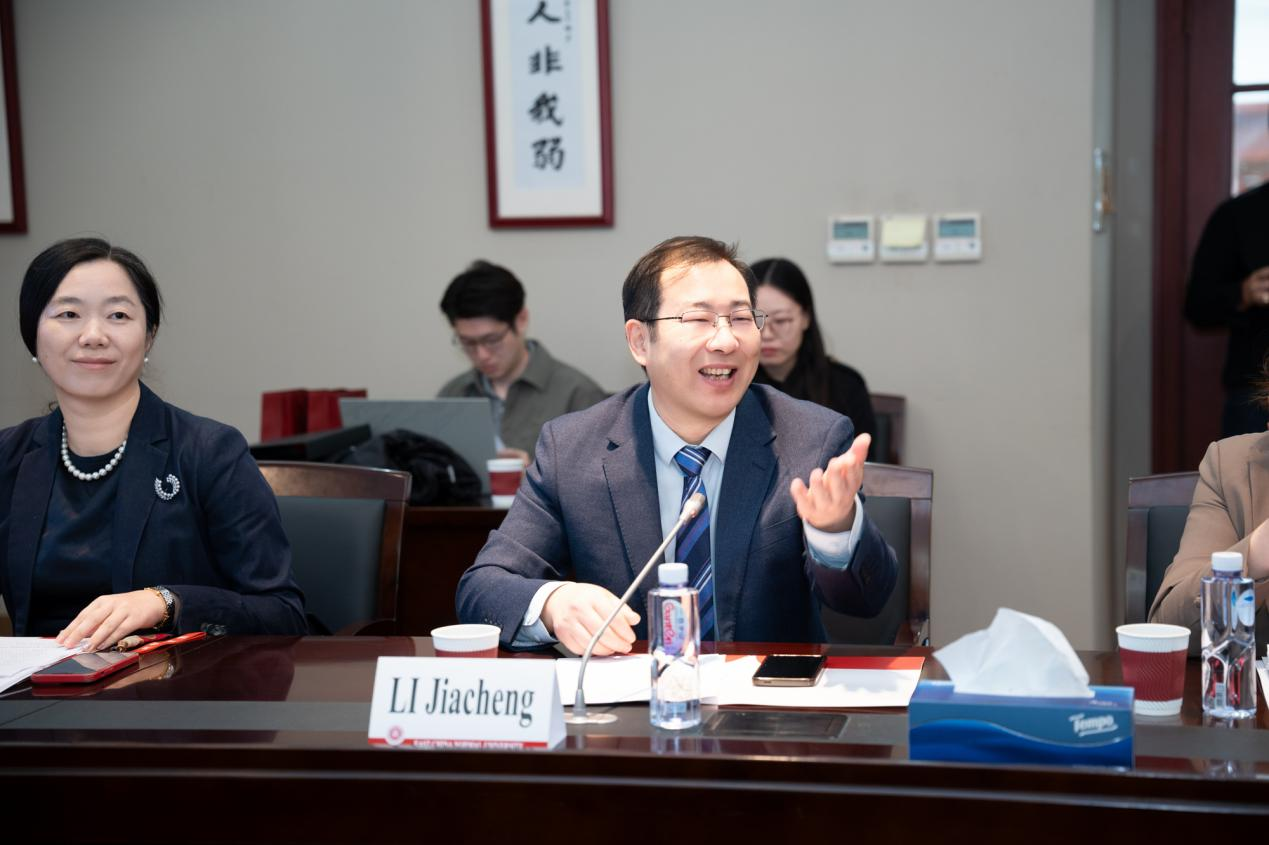
Standing at the new historical starting point of the 50th anniversary of China-Thailand diplomatic relations, this visit not only continues the profound friendship of "China and Thailand being one family" but also opens a new chapter in educational cooperation between the two countries. Moving forward, both sides will jointly promote the construction of a cooperative network for learning cities, using educational collaboration as a bond to translate the vision of a "China-Thailand community with a shared future" into concrete actions, contributing Asian wisdom to global sustainable development.


East side of 7th Floor, No. 3663, North
Zhongshan Road, Shanghai, China, 200062
Tel: +86 21 6223 2322
www.smile.ecnu.edu.cn
版权所有:上海终身教育研究院