
CONTACT US
East side of 7th Floor, No. 3663, North
Zhongshan Road, Shanghai, China, 200062
Tel: +86 21 6223 2322
www.smile.ecnu.edu.cn
To further promote exchanges among member cities of the UNESCO Global Network of Learning Cities (GNLC) and to broaden and deepen Shanghai's international cooperation in lifelong education, from 4 to 9 October, Li Jiacheng, Executive Vice President of the Shanghai Municipal Institute for Lifelong Education, led a delegation on an official visit to Cork City in Ireland, Hamburg City in Germany, and the UNESCO Institute for Lifelong Learning.
On the morning of 4 October, the delegation was invited to visit Cork City Hall in Ireland, where they received a warm welcome from Mr Fergal Dennehy, Lord Mayor of Cork. Mr Denis Barrett, Learning City Coordinator for Cork City; Ms Kelsey Wang,Policy Advisor to the Cork Chinese Chamber of Commerce; and Mr Alex Linparticipated in the exchange. The Mayor provided the delegation with a detailed account of Cork's historical development and current status, alongside the cooperative origins and progress of the sister-city relationship between Shanghai and Cork. Both Cork and Shanghai are recipients of the UNESCO Global Learning Cities Award. The two sides engaged in extensive discussions on numerous shared topics, including the responsibilities undertaken in advancing learning city development and the global learning network. They expressed a shared commitment to further strengthening cooperation, mutual learning, and collaborative development.


On the afternoon of 4 October, the delegation visited the Professional Diploma in Adult and Community Education programme at University College Cork for an on-site observation session. They engaged in further in-depth discussions with Mr William McAuliffe, Co-Chair of Cork City's Learning City initiative, and Mr James Leonard, Coordinator of Cork City's Lifelong Learning Festival, regarding the city's organisation and implementation of the Lifelong Learning Festival.

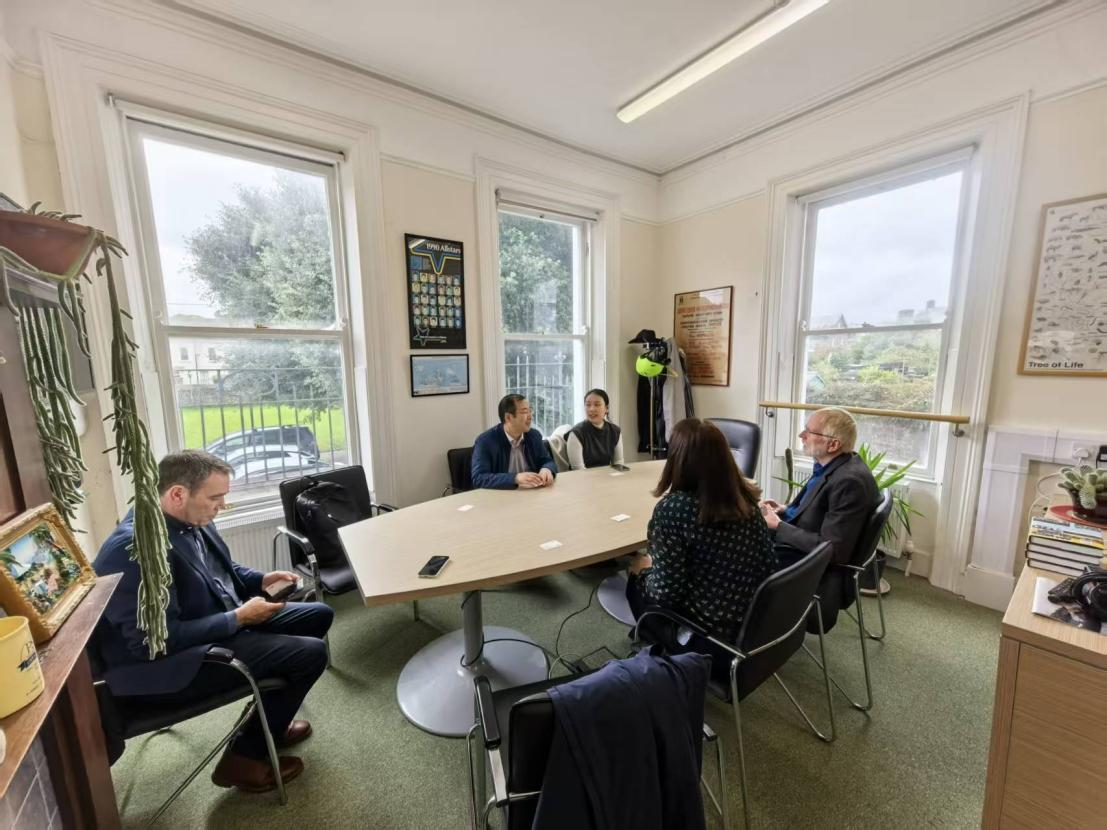
On 6 October, the delegation visited University College Cork, where they engaged in discussions with teaching staff from the Confucius Institute, the Director of the Centre for Adult and Continuing Education, and Professor Séamus O’Tuama of University College Cork. The delegation gained deeper insights into the operational overview of the University College Cork Confucius Institute and its community Chinese language education initiatives. They also observed the Institute's active engagement in Cork's learning city development and studied the city's exemplary practices in this field. Drawing upon shared professional backgrounds, the delegation engaged in preliminary discussions with staff from the University of Cork's Adult Continuing Education Centre regarding recent research priorities in lifelong and adult education. Both parties deepened their understanding of topics including learning city development, qualifications frameworks, higher education institutions' contribution to lifelong learning, and lifelong learning and development, laying foundations for future collaborative research.
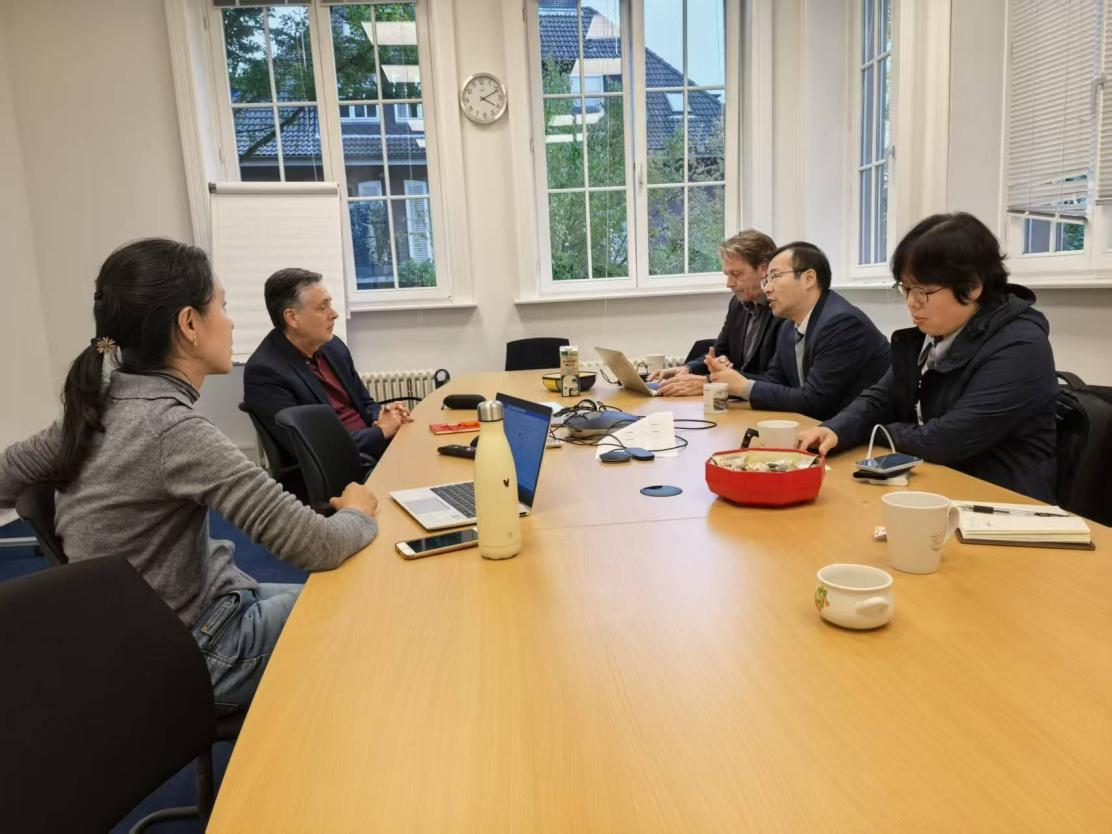
On 7 October, the delegation visited the Ministry for the Environment, Climate, Energy and Agriculture of Hamburg. They engaged in in-depth discussions with Mr Ralf Behrensand Mr Jürgen Forkel-Schubert, Head of Hamburg's Education for Sustainable Development (ESD) Programme and Coordinator of the Hamburg Learning City Network, regarding recent progress in ESD initiatives within both cities. Since 2020, Hamburg and Shanghai have served as coordinating cities for the ESD thematic group within the Global Network of Learning Cities. Over the past five years, the two cities have maintained close collaboration through both online and offline channels, providing mutual support and jointly undertaking organisational and exemplary responsibilities to advance the thematic group's work.

In the afternoon, the delegation visited Sternschanze Primary School in Hamburg. Mr Stefan Behr, the school's Green Campus Coordinator, delivered a presentation on the theme of ‘Nature-Oriented Campus Development’. During an in-depth campus tour, he demonstrated the school's practices and experiences in establishing a green campus, enriching our understanding of Germany's nature-based approach to school environment development.

Subsequently, the delegation visited the UNESCO Institute for Lifelong Learning, where discussions were held with Mr Raul Valdes Cotera, Chief Programme Coordinator, and Ms Wang Mo, Programme Specialist, regarding developments in Shanghai's sustainable development education initiatives and the establishment of a learning cities network. The delegation presented the Institute with a compilation of case studies showcasing Shanghai's community-based sustainable development education outcomes. Mr Valdes Cotera expressed high regard and affirmation for the recently established International Open Alliance for Research and Cooperation on Learning Cities. He commended Shanghai's proactive contributions to global lifelong education in recent years and extended particular gratitude for the city's substantial support in advancing the Institute's global initiatives. Building upon the current positive cooperative momentum, both parties will further strengthen exchanges in areas including education for sustainable development, adult education, green community development, and digital transformation, thereby enhancing the quality of their collaboration.
That evening, the delegation was invited to attend the ‘ALL FOR ONE EARTH’ themed event, gaining an in-depth understanding of the forms of public welfare activities undertaken by local residents to protect the planet and safeguard the environment, and engaging in thorough discussions with attendees.
On 8 October, the delegation visited the Hamburg School Museum. Guided by the museum's director, members gained comprehensive insights into the origins of German school education and the evolution of democratic educational philosophy. Through its dedicated exploration and exhibition of educational history, the museum provides local students and citizens with rich historical resources to understand local education and its democratisation process. It showcases Hamburg's unique experience in building a learning city.

On 9 October, the delegation was invited to attend the annual conference on ESD hosted by the organising party. Through arrangements by Mr. Ralf Behrens from the Ministry for the Environment, Climate, Energy and Agriculture, the delegation held brief discussions with the Deputy Mayor of Hamburg, expressing Shanghai's continued willingness to foster friendly cooperation with Hamburg in ecological and sustainable development education. The host organisation's project director guided the delegation on a field visit to Hamburg's Climate Change Education Centre, where they observed local teachers delivering on-site nature education sessions.


Cork, Ireland, has been awarded the UNESCO Learning City Award twice, making it the only city globally to receive this honor on two occasions, highlighting its educational standards and influence. Hamburg, Germany, employs a multi-tiered, networked, and highly practical model for ESD, serving as a exemplary demonstration whose associated practice networks and operational methods provide valuable references for other cities worldwide. Through this invited visit, the Institute has strengthened direct communication with member cities of the Global Network of Learning Cities and gained on-the-ground insights into the progress and dynamics of related initiatives. Moving forward,SMILE will further engage in collaborative projects within relevant international networks, laying the groundwork for enhancing exchanges among international learning cities and fostering global dialogue on local experiences in lifelong education and the construction of learning cities.

East side of 7th Floor, No. 3663, North
Zhongshan Road, Shanghai, China, 200062
Tel: +86 21 6223 2322
www.smile.ecnu.edu.cn
版权所有:上海终身教育研究院